




Bar, not bottle: why your shampoo is mostly water

Pick up a bottle of liquid shampoo, and most of what's inside is water. Not the formula that cleans your hair. Just water sealed in plastic and shipped across the country before it reached your shower. You're paying for it, storing it, and throwing away the bottle when it's gone.
An eco-friendly shampoo bar leaves that out entirely. No water filler, no plastic bottle, no resources spent moving water you already have at home. That's the honest case for making the switch: a real reduction in what it takes to get shampoo from a factory to your head.
Most eco beauty claims sound compelling until you ask for the specifics. The bar-not-bottle argument holds up because it's built on what isn't there. You can weigh it. You can count the packaging components it doesn't come wrapped in. That kind of clarity is rare in the beauty industry, and it's what makes the switch worth taking seriously.
The case rests on subtraction: concrete reductions in water, plastic, and weight. Take out the water and the bottle, and you remove most of the footprint.
Why a shampoo bar is better for the environment
A shampoo bar is better for the environment because it doesn't include water filler or a plastic bottle. Those two things account for most of the environmental load of liquid shampoo, and an eco-friendly shampoo bar has neither.
Here's the thing. Bottled hair care is mostly water. We left the water out. When you remove the water and press the actives into a solid bar, you end up with something that's all formula, with nothing that doesn't need to be there.
That structural difference is what makes the environmental case straightforward. The bar weighs less, ships in less packaging, and doesn't require a plastic bottle at all. The footprint per wash is lower because the active formula-to-everything-else ratio is so much better.
This post makes one claim precisely: the win is reduction, not neutrality. We're not saying a shampoo bar erases a footprint or offsets everything a person produces. We're saying that removing the water and the bottle eliminates most of the problem. That's a specific, verifiable claim, and it's the one Humble is willing to stand behind.
Humble bars have a shorter ingredient list than most liquid shampoos, making them easier to read for anyone who checks labels. Scent comes from essential oils, not synthetic fragrance, which means the aroma comes from real plant sources you can look up.
The water problem in liquid shampoo
Liquid shampoo is mostly water by composition. That's not an exaggeration. It's a straightforward result of how the formula works. Water is the base that holds everything else together: the surfactants, conditioners, essential oils, and preservatives that make up the rest. The actual cleaning formula is a small fraction of what's in the bottle.
That water doesn't come pre-loaded in your shower. It gets added at the factory, sealed in plastic, and moved multiple times before it reaches you. A single bottle can travel from the factory to a warehouse, a distribution center, and a store before ending up in your bathroom. Most of what you're paying to ship, store, and eventually discard is water you could have gotten from your own tap.
The weight matters at every step. Water is heavy, and that weight shows up across the supply chain. Heavier loads require more fuel. More plastic gets used to contain a heavier liquid. The entire logistics infrastructure for liquid shampoo exists largely to transport a formula that wouldn't need to be transported if it weren't diluted in the first place.
A solid shampoo bar sidesteps that entirely. The water gets added to your shower, where it belongs. The bar ships dry and ships light. Bar shampoo is also more concentrated than liquid, so a smaller bar can deliver the same number of hair washes as a much larger bottle. That's not a sustainability marketing claim. It's what happens when you remove the filler from the equation.
Knowing what eco-friendly labels signal makes this comparison easier. Our breakdown of what eco-friendly beauty claims really mean explains which factors carry the most weight, and water content and packaging are near the top of that list.
What plastic-free means here
Plastic-free is a claim that means exactly as much as the specifics behind it. A product can call itself plastic-free and still have a plastic lid, a plastic seal, or a synthetic lining you'd need a microscope to see. So when we describe a plastic-free shampoo bar, it's worth being exact.
Here's what plastic-free covers on a Humble shampoo bar:
-
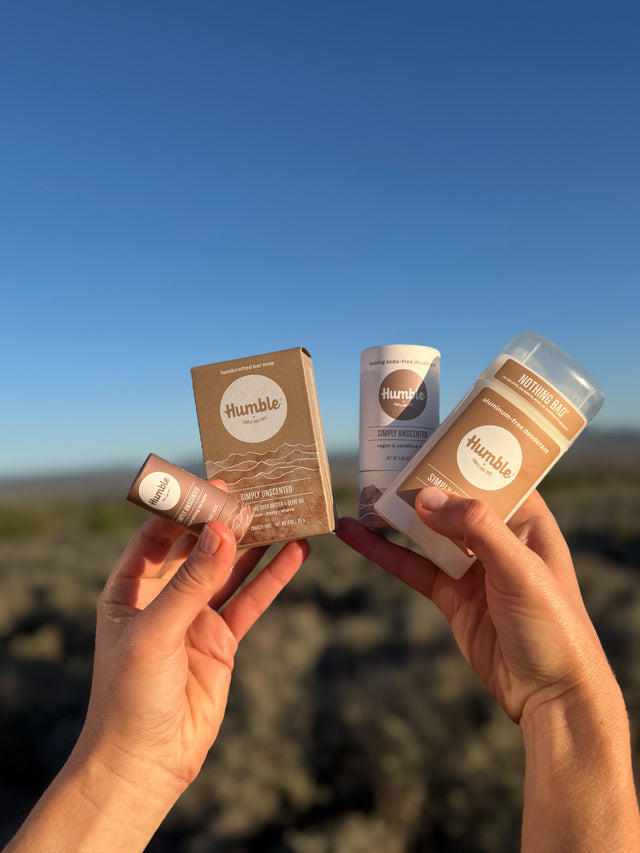
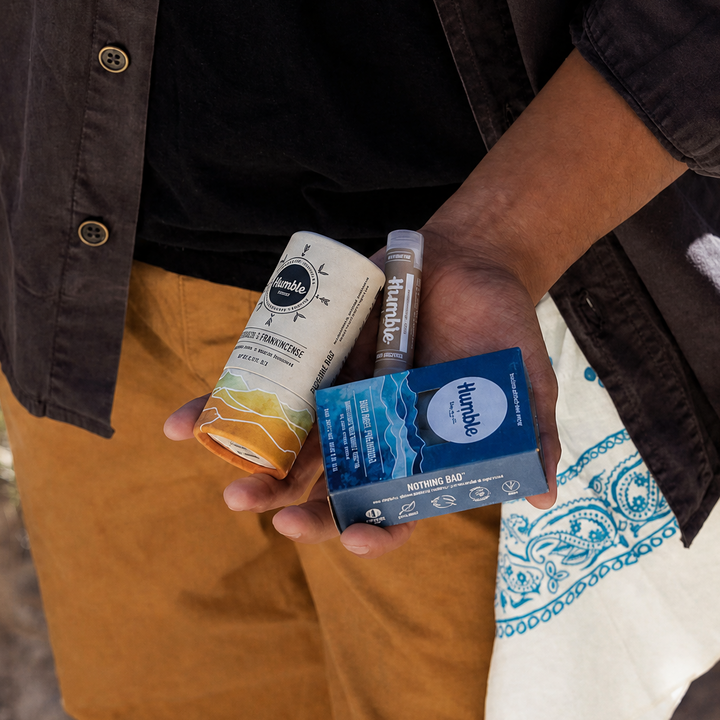
The primary packaging is a recyclable paperboard box. No plastic film, no plastic cap, no synthetic coating.
-
No plastic bottle, no pump, nothing to throw away but the carton to recycle.
This wasn't a compromise or a retrofit. Entering the hair care category meant entering plastic-free from the start, consistent with Humble's commitment to removing plastic wherever a viable alternative exists. A solid bar in a paperboard box isn't a workaround. It's what the category looks like when you design it plastic-free from the ground up.
The distinction matters because partial claims are common. "Recyclable" packaging often means theoretically recyclable under ideal conditions, not that curbside programs will take it. Paperboard is widely accepted in standard recycling. A plastic free shampoo bar in a paperboard box doesn't require a special drop-off or a certified facility.
Humble's bar soaps follow the same packaging philosophy. If you're curious what that looks like across the product line, the Humble bar soap page lays out the details. If you've made a switch like this before, you know how rare this kind of specificity is. Brands that name every component are the ones worth switching to.
The bars carry the same commitment inside: no silicones, no sulfates, no parabens, nothing animal-derived. The ingredients get the same attention as the packaging.
What the switch reduces
The sustainability case for a shampoo bar becomes clearest when you put something concrete to it. Here's what Humble is willing to stand behind.
One bar replaces about one bottle, at about a fifth of the shipping weight. That's an estimate, based on how concentrated bars are compared to standard bottled shampoo. The formula is the same for a solid bar regardless of hair type: fine hair, dry hair, or an oily scalp.
What this means for you: when you switch to a solid bar, you're not just changing what sits on your shelf. You're changing what had to be manufactured, filled, shipped, and discarded to get you a single wash cycle's worth of hair care. That reduction happens at every point in the supply chain, not just at the end of life.
The plastic bottle is entirely eliminated from the equation. Lighter loads use less fuel. Less packaging ends up in a landfill. The full range of plastic-free products, including bar soaps and the Humble plastic-free deodorant line, lives in the plastic-free product collection. The shampoo bars sit in a lineup built around the same principle: take out what doesn't need to be there, and the footprint follows.
What we won't claim, and the commitments that back it up
There's one thing Humble won't say about these bars: that they're carbon-neutral, net-zero, or that using them offsets your environmental footprint. Those claims require a full lifecycle assessment that accounts for every input, from raw material sourcing through end-of-life disposal. Humble hasn't published one, and until that work is done, those words won't appear.
That's what the most trustworthy sustainability claim looks like: it names its own limits.
What Humble will say: the eco-friendly shampoo bar significantly reduces water in transit, eliminates plastic packaging, and ships at a fraction of the weight of its liquid counterpart. Those claims are specific and defensible. You can weigh the bar. You can look at the packaging. The math is simple arithmetic.
The commitments behind those claims are ones you can check. Humble is a member of 1% for the Planet, which means 1% of annual revenue goes to verified environmental nonprofits, certified by a third party every year, not just donated in spirit. The bars are Leaping Bunny-certified cruelty-free, formulated without animal testing and without anything animal-derived.
The formulas use essential oils rather than synthetic fragrance. No silicones, sulfates, or parabens. These commitments don't make a product perfect. They make it accountable. And in an industry where vague environmental promises are easy to make and rarely verified, accountable means something real.
To see all of Humble's environmental pledges in one place, visit the Humble impact page, which lays them out clearly, without spin.
Make the switch on your own terms
Switching to a shampoo bar isn't a grand declaration. It's a calculation. The bar is smaller, lighter, and ships without a bottle. The formula it contains is everything the liquid version is, minus the water that didn't need to be there.
Most people start with one bar and see how their hair responds during a two- to four-week adjustment period. Your scalp is recalibrating after years of sulfate-stripped washing to its oil production. The adjustment is real. Many people find their wash frequency drops once the adjustment is complete, which means less water is used per week and a bar that lasts even longer.
Curious? Explore Humble Brands and find the bar that fits your hair and your routine. Whether you have fine hair, dry hair, or an oily scalp, it ships in a paperboard box rather than a plastic bottle.
The water in your shower is already there. You don't need to ship it.
Related Reads


Most loved
Shop bestsellers

- Grounding
PLASTIC FREE DEODORANT
Black Spruce Plastic-Free Deodorant
$12.99
Scent intensity: 4/5


Leave a comment
Please note, comments must be approved before they are published