




Eco Friendly Deodorant: What to Look For Beyond the Label

"Eco friendly" is on everything. Your natural deodorant, your toothbrush, and your shampoo bar all claim to be kinder to the planet. But here's the thing: there's no legal definition for "eco-friendly" in the personal care industry. Anyone can slap the word on their label and move on.
You've probably felt this frustration. You want to buy something that actually matches what you care about. But after the third greenwashing letdown, when a brand's big environmental promise turned out to be marketing, you've learned to be skeptical. Rightfully.
You're past the awareness stage. You've already decided that eco-friendly matters. You're not looking for permission to care about the environment. You need a real framework to cut through the noise and figure out which natural deodorant brands are genuinely committed.
Why Eco-Friendly Means Almost Nothing on a Label
Let's start with the uncomfortable truth: "eco-friendly" has no legal definition in the US personal care industry. The FTC offers guidance in the form of the Green Guides, but they don't regulate specific terms like "eco-friendly" or "green." They're suggestions, not rules.
That matters. A company can call its natural deodorant eco-friendly based on almost anything. One plant-based ingredient? Eco-friendly. Packaging that's 50% recycled? Eco-friendly. They planted one tree? Eco-friendly. The term is so loose that it means almost nothing by itself.
The numbers prove it. A 2023 EU study found that over half of environmental claims were vague or misleading. Personal care brands aren't alone in this, but they're definitely part of the problem. When half of all environmental claims are basically marketing fiction, consumers learn to assume everything's a lie.
Here's what's really happening: natural deodorant is something most people use every single day. That repetition multiplies your environmental impact over a year, five years, a lifetime. The waste adds up. So does the truth behind the claim.
The gap between what a label says and what's happening inside a company's operations can be huge. A brand might use "eco-friendly" as a selling point while sourcing ingredients with zero transparency, shipping products globally in excess packaging, or giving a fraction of profits to environmental causes. The label says one thing. Reality says another.
Ingredients That Matter for the Environment
Evaluating whether a natural deodorant is truly eco-friendly starts with the ingredient list. This is where brands either prove they care or reveal they don't. The ingredient list is the foundation of trust.
-
The first thing to check is biodegradability. Biodegradable ingredients break down naturally without polluting waterways. When you rinse off your natural deodorant, those ingredients need to decompose safely. Plant-based ingredients generally have a lower environmental impact than petroleum-based ones and break down without leaving residue in water systems. They're also easier to source responsibly.
-
Fragrance is another area worth scrutinizing. Synthetic fragrances can contain hundreds of undisclosed chemicals. The fragrance industry is largely unregulated, so brands don't have to tell you what's actually in "fragrance" or "parfum." Those hidden chemicals have varying environmental profiles, and some persist in waterways for years. Transparency matters because hidden ingredients often mean hidden environmental costs. If a natural deodorant brand refuses to disclose fragrance components, you're right to be suspicious.
-
Palm oil derivatives are worth watching. They're common in personal care products, and unless certified through RSPO (Roundtable on Sustainable Palm Oil), they're linked to deforestation in sensitive ecosystems. The ingredient itself isn't inherently bad; sustainable palm oil exists. But the sourcing is what matters. A brand that uses certified sustainable palm oil will proudly tell you. A brand staying quiet about sourcing? Probably not sustainable.
-
Microplastics in deodorant are still a problem. These tiny plastic particles end up in waterways and can't be filtered out by water treatment systems. They're eaten by fish and wildlife, accumulating up the food chain. Look for polyethylene, polypropylene, or particle-based exfoliants on the label. These synthetic microbeads shouldn't be in personal care products at all.
-
Ingredient transparency is a philosophy, not just a marketing feature. When a natural deodorant brand lists every single ingredient and explains the purpose of each, that's a sign they've thought through their formula completely.
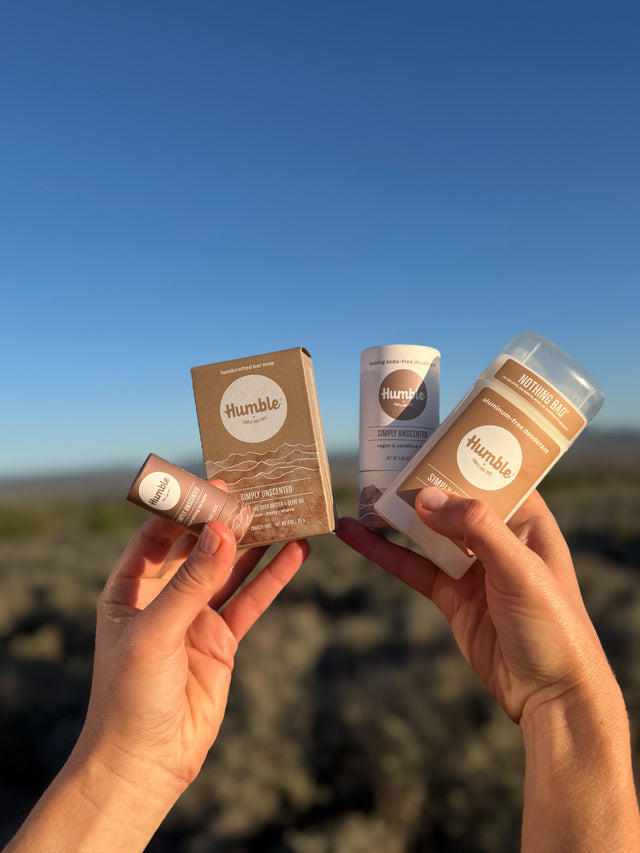
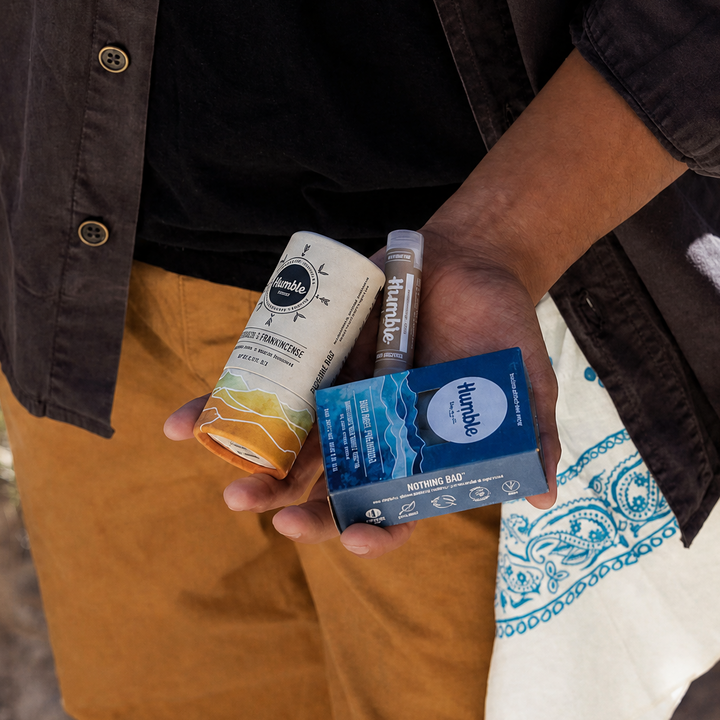
They're not hiding anything because there's nothing to hide. Humble's "Nothing Bad" philosophy means that every ingredient serves a purpose and is disclosed on the package and website. That level of openness builds trust because it's earned through consistency.
The Baking Soda Question in Natural Deodorant
Here's the thing: baking soda shows up in almost every natural deodorant formula.
There's a solid reason for that. Baking soda (also called sodium bicarbonate) works incredibly well at neutralizing odor-causing bacteria. It's inexpensive, naturally derived, and genuinely effective at what it does. For most people, a baking soda deodorant is the gold standard for performance and eco-friendliness.
-
Here's how it works: odor doesn't come from sweat itself. Sweat is mostly water and salt. Odor comes from bacteria on your skin breaking down that sweat. Baking soda raises the pH in your armpits, making that environment hostile to odor-causing bacteria. No bacteria, no smell. It's simple chemistry, and it's why baking soda has been used in natural deodorants for decades.
-
The problem: some people's skin is too sensitive for baking soda. This isn't a failure of the deodorant or your body. It's biology. Some people's armpits react to sodium bicarbonate with irritation, redness, or itching. If that's you, you're not broken. Your pits are just more sensitive than average. This is exactly why baking soda-free deodorants exist. They swap out sodium bicarbonate for other odor-fighting ingredients like Magnesium hydroxide and Tapioca starch.
-
The trade-off is real: baking soda-free deodorants are often slightly less effective for heavy odor, especially for people with active lifestyles or who deal with heavy sweat. They work beautifully for most people, but they're not quite as powerful as a baking soda formula. If you have sensitive skin and sensitive pits, though, a baking soda-free option is the right choice.
The bigger picture: whether you use a baking soda natural deodorant or a baking soda-free formula, you're making a choice that's aligned with zero waste and eco-friendly values. Either way, you're moving away from aluminum antiperspirant and choosing plastic-free packaging.
Baking soda natural deodorants work great for most people. If your sensitive pits react to baking soda, a baking soda-free formula with magnesium hydroxide or tapioca starch is your answer.
Performance Details That Actually Matter
A natural deodorant formula is only as good as what it actually delivers. Eco-friendly values matter, but so does performance. You need a deodorant that keeps you fresh through your day and doesn't create new problems.
-
Here are the performance details worth checking:
-
White marks and stains. Some deodorants leave white residue on your clothes. This usually comes from ingredients like baking soda, tapioca starch, or powders that don't fully blend into your skin. It's annoying and frankly defeats the purpose if you can't wear dark clothes without visible deodorant marks. A smooth, well-formulated natural deodorant should apply cleanly without white marks. Check the formula: does it use powders, or does it use ingredients that absorb into the skin? Humble's formulas are designed to be smooth and residue-free so you can wear whatever you want without worrying about deodorant leaving white marks on your clothing.
-
Texture and application. A sticky, gummy deodorant is hard to apply and uncomfortable to wear. A rough, grainy texture feels unpleasant and doesn't glide smoothly over your pits. The best natural deodorants have a smooth texture that applies easily without pulling at your body hair or feeling stiff. Shea butter and coconut oil in the formula help create that smooth, comfortable glide. Test the texture when you're evaluating a natural deodorant; this is one area where you can't fake quality.
-
Long-lasting performance. Does your deodorant actually last through your day? Some natural deodorants wear off after a few hours, especially if you're sweating or if you're active. A truly effective natural deodorant formula should keep you fresh for eight to twelve hours under normal conditions. That doesn't mean antiperspirant (which blocks sweat); it means odor control that stays with you.
-
Clothing compatibility. Does your deodorant stain clothes? Some formulas react with certain fabrics or dyes, creating yellow or dark stains that won't wash out. This is usually due to interactions between ingredients and sweat and clothing fabric. A well-formulated natural deodorant shouldn't create stains. If you find yourself choosing clothes around your deodorant, something's wrong with the formula.
-
Freshness through activity. If you're hitting the gym or dealing with a hot day, does your natural deodorant hold up? Some formulas are fine for office work but fall apart in the presence of moisture and movement. The best natural deodorant formulas use ingredients that genuinely work harder when they're needed most. A quality deodorant should feel as fresh at 5 pm after a workout as it did at 7 am.
Humble's formula uses shea butter for smooth application, coconut oil for conditioning, and tapioca starch for moisture management without white marks. The result is a natural deodorant that performs as you expect it to without compromising on eco-friendly values or natural ingredients.
Building an Eco-Friendly Routine (Start Small)
You don't need to overhaul your entire routine overnight. One swap at a time. One small decision that matches what you actually believe in. Progress beats perfection. Zero waste doesn't require perfection; it requires action.
Swapping deodorant is one of the highest-impact personal care changes you can make. You use a natural deodorant every day and keep buying it. That repetition means your choice compounds over a year, five years, a lifetime. One tube of eco-friendly deodorant doesn't change the world. One hundred tubes over your lifetime actually does. Multiply that across your body: if you've been using conventional deodorant, switching to plastic-free natural deodorant eliminates 40-60+ plastic tubes from landfills per decade.
Start without overwhelm. Don't search for the perfect eco-friendly, natural deodorant on your first try. Try one product swap instead of overhauling everything. Build confidence. Learn what you like. Then move to the next thing. Small wins create momentum.
You don't need perfection to make a difference. You just need to start. You don't need to adopt every certification or memorize every ingredient. You just need to ask better questions and look for clearer answers. You need brands willing to show their work.
Finding Your Scent in Eco-Friendly Deodorant
Not all scents are created equal, and choosing the right fragrance matters more than most people realize. The scent you pick isn't just about preference; it's about how that fragrance was sourced and what's actually in it.
Humble offers four core scents: Cedar & Vanilla, Lavender, Eucalyptus, and Lemongrass & Sage. Each one uses essential oils and natural fragrance blends instead of synthetic chemicals. That's a key difference. When you buy a natural deodorant with essential oil-based scents, you know what you're getting. The vanilla in Cedar & Vanilla comes from actual vanilla extract. The lavender in the Lavender formula comes from lavender essential oil. The eucalyptus comes from real eucalyptus oil.
The best way to find your scent without wasting packaging is a discovery kit. Humble's Discovery Kit includes multiple scents in plastic-free packaging so you can test what works for your body chemistry and your preferences. You're not committing to a full-size tube. You're exploring. That's the zero waste approach to finding your favorite natural deodorant.
Related Reads
Plastic Free Deodorant: A No BS Buyers Guide
- Guides
Plastic-free deodorant isn't one-size-fits-all. Here's how to pick the format and formula that actually works for you.

-
How Supporting Small Businesses and Shopping Local Makes a Difference
- Community
- go to blog how supporting small businesses and shopping local makes a difference
-
How to Choose the Best Deodorant for Sensitive Skin
- Guides
- go to blog how to choose the best deodorant for sensitive skin
-
Can You Use Lip Balm Too Often?
- Guides
- go to blog can you use lip balm too often


Most loved
Shop bestsellers

- Grounding
PLASTIC FREE DEODORANT
Black Spruce Plastic-Free Deodorant
$12.99
Scent intensity: 4/5


Leave a comment
Please note, comments must be approved before they are published