




Plastic Free Deodorant: A No BS Buyers Guide

You've already decided. Plastic-free is where you're heading. So skip the lecture about ocean gyres and landfill mountains. What you actually need is this: a straight answer about what plastic-free deodorant really is, whether it actually works, and which option fits your life.
The problem is that "eco-friendly" and "plastic-free" labels are everywhere these days, and most of them don't mean what you think they mean. Brands slap "recyclable" on a plastic tube and call it sustainable. If you're going to make the switch to a plastic-free deodorant, you deserve to know exactly what you're getting. That's what this guide is for.
What Plastic-Free Deodorant Actually Means
True plastic-free deodorant means zero plastic anywhere in the packaging. Not in the tube, cap, label, or hidden in a liner. Zero plastic. No exceptions.
Here's where greenwashing sneaks in. Some brands market "recyclable plastic" or "ocean-bound plastic" as eco-friendly. That's not the same as plastic-free deodorant. Recyclable plastic is still plastic. According to research published in Science Advances, only about 9% of all plastic ever made has actually been recycled. The rest sits in landfills or enters ocean ecosystems.
The deodorant industry generates an estimated 15 million pounds of plastic waste annually in the US. Much of that comes from packaging that looks green but delivers the same environmental impact as regular deodorant. It's a false choice.
Here's the key: if there's plastic anywhere in the packaging, it's not plastic-free. When you're trying to reduce your plastic waste, this distinction matters.
The average person uses one deodorant tube every three months, or about 4 per year. That's a lot of plastic for one small habit. And most of it doesn't get recycled the way you'd think: curbside programs often can't process small, mixed-material tubes, so "recyclable" packaging still ends up in a landfill more often than not. That's exactly why the packaging material matters as much as what's inside it.
Types of Plastic-Free Deodorant Packaging
Once you've decided on plastic-free deodorant, you've got real options for your bars and tubes.
-
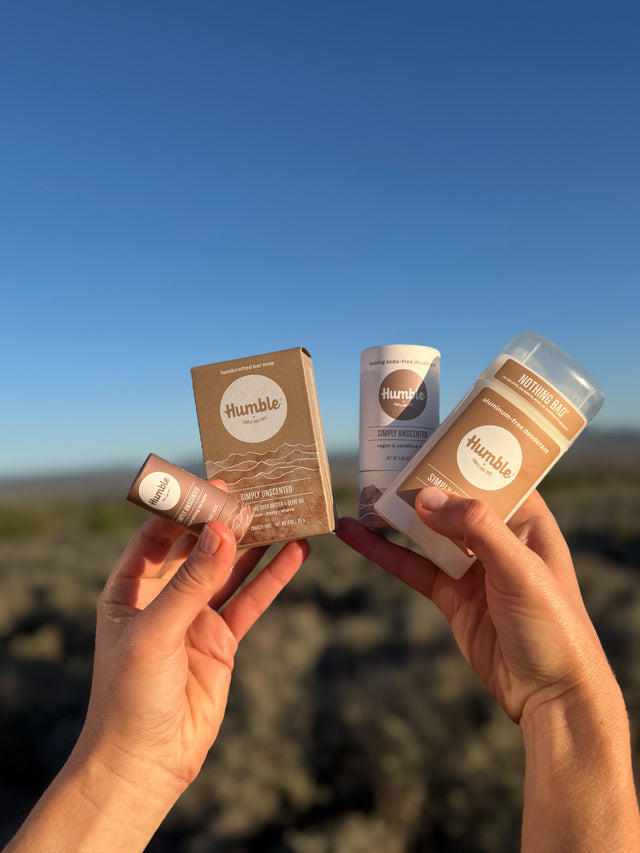
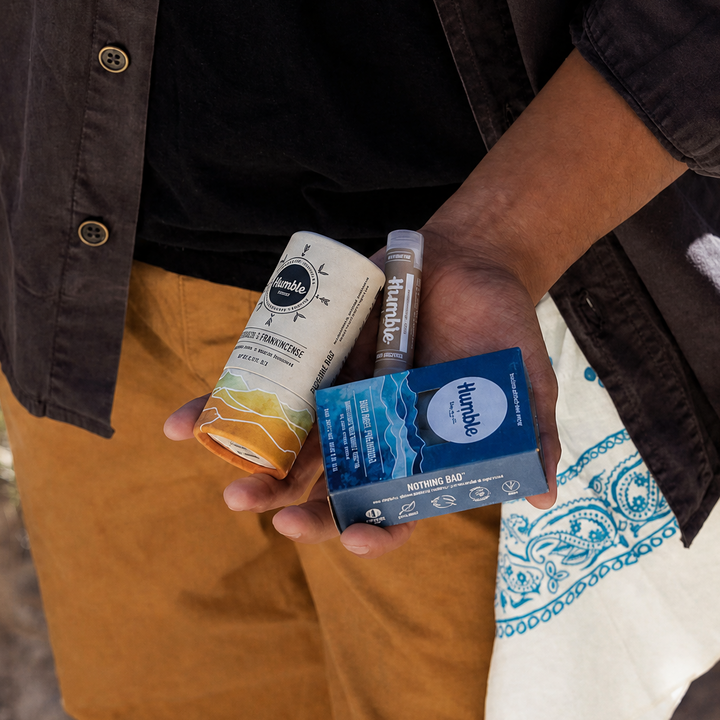
Paper tube deodorant works almost exactly like a conventional deodorant stick. Push up from the bottom, apply, done. Paperboard tubes are widely recyclable and feel familiar when switching from plastic. In a humid bathroom, the tube might soften over time, but Humble's paperboard deodorant is designed for normal conditions. You'll need slightly more pressure at first, but that adjustment takes days, not weeks.
-
Metal tins are made of aluminum, which is infinitely recyclable without loss of quality. You'll use your finger to swipe product from the tin, adding a step. Metal tins don't soften in humidity and feel premium, but finger application isn't for everyone. Aluminum recycling also requires less energy than producing new aluminum, so there's an environmental win built in.
-
Glass jars are reusable and beautiful, but heavy and fragile. A broken jar in the shower isn't fun. Glass works great if you love the reuse factor and accept the risk.
-
Compostable wraps have the lowest material footprint. Paper or plant-based wrap around a solid deodorant bar or stick. This appeals to people who want zero waste, but the wrap feels flimsy and you're unwrapping something every application.
Here's the thing: there's no single "best" plastic-free deodorant packaging. Match the format to how you live. If you hate getting your hands dirty, skip the tins and jars. If humidity is your enemy, paperboard might frustrate you. If you prefer a bar over a tube or stick, try a solid deodorant bar. If you want true zero-waste, compostable wraps work.
Does Plastic-Free Deodorant Actually Work?
Short answer: yes. Your deodorant's effectiveness has nothing to do with the tube. Chemistry doesn't care about packaging.
A lot of skepticism comes from bad experiences with "natural deodorant." Some people tried it, smelled bad by lunch, and decided natural doesn't work. That's partly true. Many natural deodorants don't work as well as conventional antiperspirants because they lack aluminum chlorohydrate, the ingredient that stops sweat at the pore level. But that's a formula problem, not a packaging problem.
A great deodorant formula works well whether it's in plastic or paperboard packaging. The packaging isn't the bottleneck. The formula is.
How Ingredients Actually Work
Think about how a plastic-free deodorant works. Real formulas use natural actives to neutralize odor and control moisture. Humble's plastic-free deodorant uses ingredients like arrowroot powder and magnesium hydroxide to absorb odor and sweat.
Let's break down baking soda, which shows up in tons of natural deodorants. Sodium bicarbonate (baking soda) actually works by raising the pH of your underarm. Odor-causing bacteria thrive in acidic environments. When you raise the pH, you create a hostile environment for those bacteria. No bacteria, no smell. It's simple chemistry. That's why baking soda has been used for decades as a natural deodorant ingredient.
But here's what you need to know: some people's skin reacts to baking soda. Sensitive skin or sensitive pits can feel irritated after switching to a baking soda formula. If that's you, don't assume natural deodorant doesn't work. It just means you need a baking soda-free formula. That's where magnesium hydroxide or arrowroot powder becomes your odor-fighting hero. Magnesium hydroxide neutralizes odor through a different mechanism, without the pH shift that irritates sensitive skin. Arrowroot powder absorbs moisture and odor. Both work well; they're just gentler on reactive skin.
Shea butter and coconut oil moisturize and condition skin. Our vegan bar and tube formulas use coconut oil for its natural antibacterial properties. These ingredients work the same in a bar, a stick, or a tube. What changes is the application method. The protection doesn't.
The Transition Period, Explained Day by Day
Here's the thing: most brands don't talk about switching to natural deodorant, often coming with an adjustment period. It's not a detox. It's your body recalibrating.
For years, conventional antiperspirants blocked your sweat glands with aluminum. Your body adapted. When you switch to a formula without aluminum, your sweat glands wake back up. In the first few days, you might sweat more than usual. That's normal. By week two, most people find that sweating normalizes and odor control improves. The key is patience. Don't judge a natural deodorant after day one.
Why Certifications Actually Matter
Leaping Bunny means cruelty-free, verified by a third party. Look for vegan and cruelty-free credentials that are verified. Humble's deodorant bar, stick, and tube are all vegan and cruelty-free. Our cruelty-free products are never tested on animals. 1% for the Planet means the brand donates 1% of revenue to environmental nonprofits (and it's audited). USDA Organic means ingredients were grown without synthetic pesticides or fertilizers. B Corp means the company meets rigorous social and environmental standards. These certifications matter because third parties verify them, not the brand.
Making the Switch and What to Expect
If you've used conventional deodorant your whole life, switching to plastic-free will feel different. Here's what actually happens.
-
Application matters. Start by applying to clean, dry skin. Damp armpits reduce effectiveness. If your skin is wet, wait a few minutes after showering before applying. This simple step makes a huge difference in how well the deodorant works.
-
Give it time. Expect a brief adjustment period — days for some people, two weeks for others. Your body is adjusting to not having pore-blocking ingredients coating your skin. It's just rebalancing. Don't judge a product after day one. Give it at least a week before deciding it's not working.
-
Reapply if needed. Unlike antiperspirants that block sweat, deodorants work with your body's natural processes. Some people need reapplication midday during the first week or two of switching, especially during physical activity or heat. This usually settles down after the adjustment period.
-
Body chemistry is real. What works perfectly for your friend might not work for you. Everyone's sweat chemistry is different. Some people's bodies produce more acidic sweat. Others produce more alkaline. These differences affect how well any given deodorant works. This is why sampling matters. Try a discovery kit or sample set. You're not locked into one choice if it doesn't work for you. You can try a few scents and see what sticks.
Start with an unscented option if you have sensitive skin. Once your skin settles, experiment with other scents. Build your own bundle and mix scents to find exactly what works for you.
You don't need to overhaul your entire bathroom to make a difference. One swap, one tube of plastic free deodorant, one less piece of plastic waste. That's a real start.
How to Choose the Right Plastic-Free Deodorant
When you're narrowing down your options, focus on three key areas: ingredients, certifications, and scents.
-
Start with the ingredient list. Read the actual list and look for plant-based actives. Sodium bicarbonate and baking soda absorb odor and sweat. Arrowroot powder absorbs moisture. Shea butter and coconut oil moisturize and condition skin. Understanding what each ingredient does helps you predict whether the formula will work for you. Some formulas use a baking soda-free approach if you have sensitive skin or a baking soda allergy. Others balance ingredients to be gentle on all skin types. Check out how botanically-based fragrance differs from synthetic options so you know exactly what you're getting scent-wise.
-
Check what certifications the brand actually carries. Real third-party verification beats marketing speak every time. If a brand claims cruelty free, ask if it's Leaping Bunny certified. If it claims vegan, look for the Vegan Society logo or similar. Humble's deodorant is both, with verified certifications backing it up.
-
Pick your scent. If the label says "fragrance" without specifying essential oils, it's synthetic fragrance. That's not inherently bad, but if you care about what goes on your skin, you deserve to
Humble offers scents like Cedar & Vanilla scent details, Mountain Lavender Natural Deodorant, Eucalyptus, and Lemongrass & Sage, all in plastic-free tubes, Deodorant sticks, and bar formats. All scents are vegan and formulated to stay fresh and provide long lasting odor control. Try Cedar & Vanilla for a warm, grounding scent with cozy, vanilla-forward notes.
Lavender offers calm, while Eucalyptus provides clarity. The Cedar & Vanilla bar features vanilla essential oil paired with cedarwood and coconut. Each of our vegan scents is crafted with vanilla, essential oils, coconut, and shea butter to fight odor naturally.
Related Reads


Most loved
Shop bestsellers

- Grounding
PLASTIC FREE DEODORANT
Black Spruce Plastic-Free Deodorant
$12.99
Scent intensity: 4/5


Leave a comment
Please note, comments must be approved before they are published