




Can You Use Lip Balm Too Often?

Lip balm is not addictive. That is the whole answer; everything else is just the why. The word "addictive" implies a dependency mechanism, a chemical loop that makes your body need more of something to feel normal. There is nothing in a butter-and-wax balm that does that.
What there is, instead, is a pair of lips that cannot make their own moisture, living in a world that is constantly trying to take it away. Reapplying is arithmetic, not addiction.
Your lips feel dry; you apply balm; they feel better; the moisture evaporates; you apply again. That is lips being lips.
If that loop feels uncomfortably familiar, the question worth asking is not whether you are addicted to lip balm. It is whether the balm you are using is actually helping, or whether it is built in a way that makes the cycle worse.
Those are two very different problems, and they have two very different answers. Chapped lips that stay chapped despite regular balm use deserve a closer look at what is in the tube, not a conversation about willpower.
A short ingredient list is the clearest signal that nothing is hiding in a formula designed to keep you coming back out of discomfort rather than genuine need. That is the honest standard worth holding any lip balm to.
Why Lips Dry Out in the First Place
Skin elsewhere on your body has a built-in resupply system. Sebaceous glands, the oil glands that sit just below the surface, continuously secrete oil to help maintain the skin barrier and slow water loss. The vermilion border, the actual lip skin at the edge of your mouth, has few to none of those glands. That is not a flaw in the design.
It is just anatomy. Lips depend almost entirely on outside help to hold moisture, which is why a balm is not a luxury. It is filling in for a system that was never there.
Licking makes dry lips worse, even though it feels like relief. Saliva evaporates quickly, and when it goes, it takes surface moisture with it. The brief cool feeling is a net loss. You end up with lips drier than before you started, which is why licking is the one habit actually worth breaking.
Environment stacks on top of all of this. Wind pulls moisture off the surface. Sun accelerates water loss and can damage delicate lip skin over time. Dry indoor heat in winter turns the air into a slow dehumidifier. None of those forces care that your lips have no oil glands.
They just keep pulling. A balm creates a physical barrier that slows that process down, and lips that are already compromised need that barrier more often, not less. Reapplying throughout the day is not a bad habit.
The "Addiction" Myth, Plainly
The idea that chapstick is addictive has been circulating online long enough to feel like received wisdom. The specific version that persists is that some brands add irritants so lips feel worse without the product, creating a loop that keeps you buying. That is a real practice. Menthol, camphor, and certain synthetic fragrance compounds can produce a tingling sensation that some people interpret as the balm working, but the tingle itself does not hydrate.
For people with sensitive skin, those ingredients can actually leave lips drier, which means the balm that felt like relief is quietly making the problem it claims to solve a little worse each time.
This is not a true addiction in any clinical sense. There is no psychological dependence, no withdrawal, no chemical dependency loop. But an irritant-driven experience where lips feel worse without a specific product is real and frustrating, and it is worth naming honestly.
The honest line is this: a balm built from a short list of butters, waxes, and essential oils has nothing in it that belongs to that category. A formula without synthetic fragrance, without menthol, without camphor, is a formula with no mechanism to make you feel addicted to lip balm.
The ingredient list is short enough to read in ten seconds, which is the clearest signal that nothing is hiding in it.
What's Actually in a Short-list Balm
A lip balm's job is to hold moisture. That is it. Organic coconut oil and cocoa butter provide hydration, detailed in our ingredient index.
Beeswax creates the physical barrier that slows evaporation and keeps lips moist between applications. Apricot kernel oil adds nourishment, and vitamin E supports the skin barrier over time. Essential oils like French Peppermint provide flavor from a recognizable source, with no synthetic fragrance standing in for the real thing.
Many lip balms add menthol or camphor for a cooling or tingling sensation that signals to the brain that something is happening. The sensation is real. The hydration it implies is not.
For people prone to irritation, that tingling sensation can mean the balm is mildly aggravating the surface it is supposed to protect, which is exactly the mechanism behind the "addiction" feeling people describe with certain balms.
A short-list balm is not built to feel like anything in particular. It is built to hold moisture and get out of the way. When lips feel better after applying it, that is because they are less dry, not because a sensation has been triggered.
The difference matters if you have ever finished a tube and wondered why your lips felt worse than when you started.
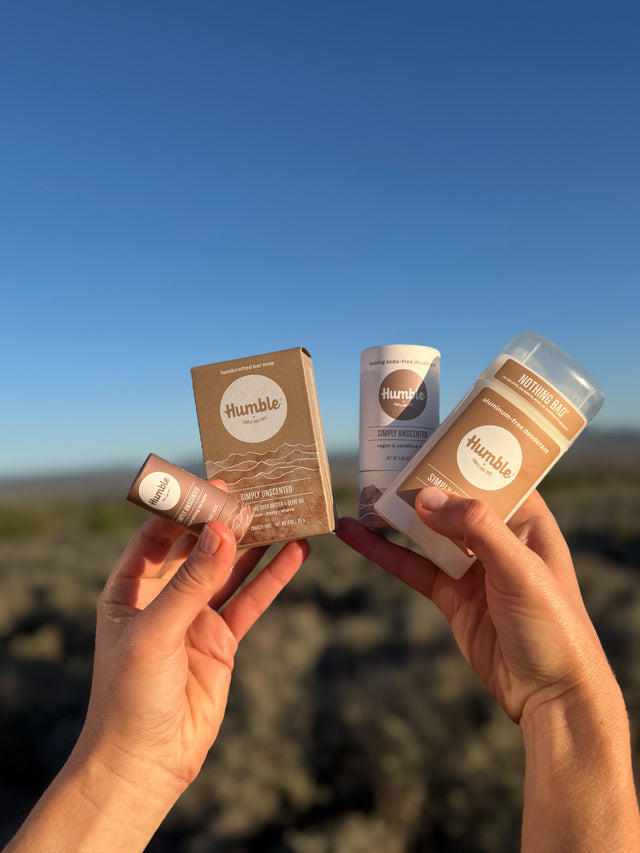
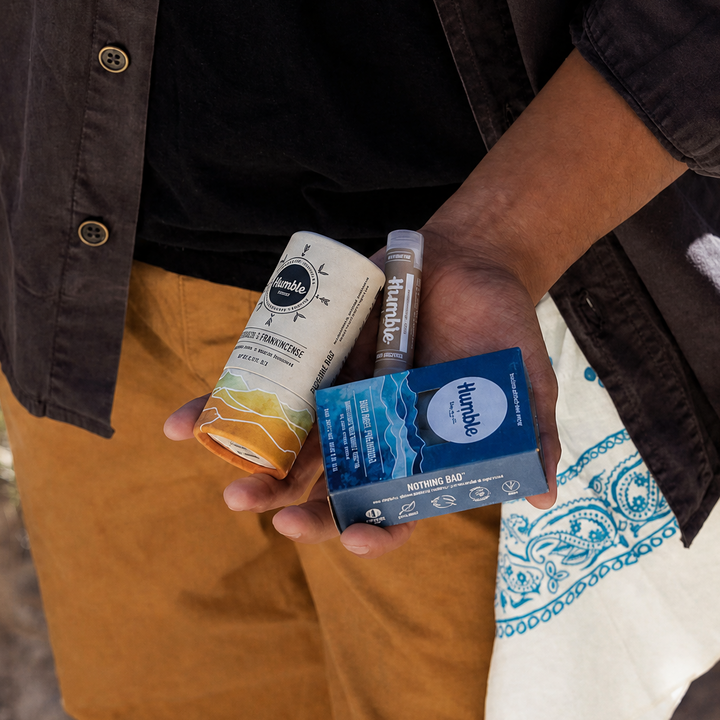
Humble's lip balm comes with a 60 Day Love-It Guarantee and a list you can read in ten seconds, so the only thing you are risking is finding out your lips have been fine all along.
What Reasonable Use Looks Like
Apply when your lips feel dry. Apply before you go outside for a long stretch, especially in wind or sun. Apply before bed, when lips have hours to absorb without interruption.
If you like applying more lip balm than that, go ahead. The stakes are genuinely low. There is no meaningful ceiling on how often you can use lip balm, and counting applications is not a useful exercise.
Some people apply more in winter or at altitude, where dry air and cold work together to strip moisture fast. Some people barely think about it in humid weather.
Spicy foods and eating in general can wear balm away faster, so reapplying after meals is just practical, not a sign of overuse.
The real mistake is licking. It feels instinctive when lips feel dry, but saliva evaporates fast and leaves lips drier than before. If you notice yourself reaching for more lip balm constantly and also licking between applications, breaking the licking habit will do more than switching products. Avoid licking, apply balm when you actually need it, and let the barrier do its job.
When Dryness Is More Than a Lip Balm Question
Ordinary chapped lips respond to a balm within a day or two. If you are applying consistently and dryness is not easing, that is worth paying attention to.
Cracked lips that bleed, persistent redness, swelling, or dryness that does not respond to regular balm use can point to things outside what a topical moisturizer addresses.
Extreme cold or wind exposure, dehydration, or a skin condition are all possibilities that a board-certified dermatologist is better positioned to assess than any lip balm.
Any persistent change in the lip surface that does not resolve is worth having looked at.
This is not a reason to worry about normal dryness. It is a reason to notice when something is not behaving like normal dryness, and to treat that as a signal rather than a reason to reach for more balm.
FAQs: Is Lip Balm Addictive?
Here are the straightforward answers to what people search most when they start wondering whether their lip balm habit is something to worry about.
Is Lip Balm Addictive?
No. A balm made from butters and waxes has no dependency mechanism. The reapply loop is real because lips have no oil glands and cannot resupply their own natural moisture. The chemistry of dependence is not present. What some people experience as being addicted to lip balm is actually irritation from specific ingredients in certain formulas, not a property of lip balm use itself.
Should I Stop Using Balm to Train My Lips?
No. Lips do not have oil glands to train. Going cold turkey does not teach lips to produce more moisture.
It just leaves them without the barrier they need. If you stop using balm, your lips return to their baseline dryness, not a withdrawal state. There is no benefit to withholding, and lips hydrated by a simple balm are not dependent on it in any meaningful sense.
How Often Is Too Often?
There is no meaningful upper limit on lip balm use. Apply when your lips feel dry. The only habit worth changing is licking, which removes moisture rather than adding it.
Is Chapstick the Same as Lip Balm?
Yes, functionally. Chapstick is a brand name that became a generic term, the way people say "Band-Aid" for any adhesive bandage. Both chapstick and lip balm address the same underlying issue: lips that cannot produce their own moisture and need a barrier to hold what they have. The ingredients vary by brand, which is why reading the label matters more than the name on the tube.
Will My Lips Get Worse If I Stop?
They will return to their baseline, not to something worse than before you started. There is no withdrawal state. If your lips feel significantly worse when you stop a specific balm, that is worth noticing. It may mean the balm used an irritant that created a dependency-like loop, not that lip balm use itself caused a problem.
Are Tingly or Cooling Lip Balms Bad?
Not inherently. But the tingling sensation does not hydrate. For some people, the ingredients that create that feeling, particularly menthol and camphor, can leave lips drier with repeated use. That is the mechanism behind the "addiction" feeling people describe with certain balms. If a balm consistently leaves your lips feeling like they need more of it, the ingredient list is the first place to look.
Be Done Worrying About It
The question of whether lip balm is addictive is really a question about trust.
Whether the product in your purse is working for you or quietly working against you. A short ingredient list that you can actually read is the clearest answer to that question. Butters hydrate and keep lips moisturized.
Chapped, irritated lips that stay chapped despite regular balm use tell you something about the formula, not your willpower. A beauty routine built around honest ingredients should feel like relief, not a vicious cycle. Apply when your lips feel dry. Skip the licking. Let the balm do its one job, and let that be the end of the worry.
If you want to see the full ingredient list before you commit, Humble's lip balm comes with a 60 Day Love-It Guarantee, so the only thing you are risking is finding out your lips have been fine all along.
Small tube. Short list. Humble On.
Related Reads


Most loved
Shop bestsellers

- Grounding
PLASTIC FREE DEODORANT
Black Spruce Plastic-Free Deodorant
$12.99
Scent intensity: 4/5


Leave a comment
Please note, comments must be approved before they are published