




How to Switch to Natural Deodorant Without the Smell or Rash

You're three days into switching to natural deodorant. You've washed your armpits twice today, you're wearing your loosest linen shirt, and you're still not sure this was a great idea. Sound familiar? That moment of doubt is exactly where most people give up on switching to natural deodorant, and it's also the moment that matters most.
Here's the thing: what you're experiencing isn't failure. It's your body doing exactly what it's supposed to do. The transition period is real; it's temporary and follows a predictable pattern. Once you know what to expect and why it's happening, the whole process gets a lot easier to stick with.
This guide walks you through the science behind the switch, a week-by-week roadmap of what's coming, and practical ways to stay fresh while your body adjusts. By the end, you'll have everything you need to make the switch with confidence.
Why Switching to Natural Deodorant Causes a Transition Period
Day three of your switch, standing in the shower and wondering if you made a mistake, that's one of the most common moments in the natural deodorant transition. What's actually happening under your arms is more interesting than you might think.
Conventional antiperspirants work by temporarily plugging your sweat ducts with aluminum salts, an effect that Germany's Federal Institute for Risk Assessment confirms blocks them for a time.
According to the American Cancer Society, antiperspirants reduce wetness by blocking sweat glands with aluminum-based compounds, while deodorants primarily address odor without stopping sweat. When you stop using an antiperspirant, those sweat glands reopen, and your body starts regulating temperature the way it was designed to.
At the same time, your underarm microbiome shifts. Research published in mSphere found that antiperspirant and deodorant use alters the axillary microbiome, the community of bacteria living on your skin, and that users differ significantly in bacterial composition compared to nonusers. When you remove the product that was shaping that environment, your skin's bacterial community rebalances. A separate study in PeerJ showed that stopping antiperspirant use can change the underarm microbiome and increase bacterial diversity within days.
Body odor is linked to bacterial metabolism, as peer-reviewed research confirms that skin bacteria break down sweat into odor-causing compounds. Odor-causing bacteria break down sweat components into odor molecules, and peer-reviewed axillary microbiome research shows the axilla (your armpit) is one of the most studied body sites for this natural process. During the transition, your microbiome is shifting toward a new balance, and that shift can temporarily increase odor and wetness before things settle down.
The detox period happens because your underarm microbiome and sweat glands are rebalancing after years of being blocked by antiperspirant. It's a sign your body is working, not failing.
What to Expect Week by Week During the Natural Deodorant Transition
Knowing the timeline is one of the most useful things you can have going into this. Most people experience the transition in distinct phases, and understanding what's happening each week makes it easier to stay the course. You can read more about what to expect when switching to all-natural deodorant before you start.
-
Week 1 The Adjustment Begins: This is typically the most noticeable week. Your sweat glands are reopening, your microbiome is shifting, and your body is producing more sweat than it will once things settle. You may notice more wetness than usual and stronger body odor, especially by midday. This is normal. Reapplying your natural deodorant in the afternoon can help, and wearing natural fabrics will make a real difference. Stick with it, this is the hardest part.
-
Week 2 The Peak: For most people, weeks one and two are the smelliest and wettest period of the transition. Many report that the smelliest phase often lasts about one to two weeks. Your microbiome is still finding its new balance. Keep your routine consistent, stay hydrated, and know that you're almost through the hardest stretch.
-
Week 3 Noticeable Improvement: By week three, most people notice a real shift. Odor becomes less intense, wetness starts to normalize, and you're likely reapplying less often. Your skin's bacterial community is settling into a healthier balance. The adjustment period is often described as lasting a few weeks, with gradual changes in odor and wetness as the underarm environment rebalances.
-
Week 4 and Beyond: Full Adjustment. Most people feel fully adjusted by week 4. The transition is often described as lasting up to 30 days. Some people take a little longer, and that's completely normal. Bodies are different. If you're still noticing more odor than expected after four weeks, it may be worth trying a different formula rather than giving up entirely.
Most people experience the strongest odor and wetness in weeks one and two, with noticeable improvement by week three and full adjustment by week four. Knowing what to expect makes it easier to stick with it.
How to Make the Transition Easier and Reduce Odor
The transition can be uncomfortable, but there are real, practical things you can do to make it more manageable. These aren't rules; they're tools. Use what works for you.
-
Exfoliate gently. Dead skin cells can harbor bacteria, and a gentle exfoliant a couple of times a week may help clear them away without irritating your skin. Skip harsh exfoliating acids on freshly shaved skin; a soft washcloth or a mild scrub works well. This keeps your underarm environment cleaner as your microbiome rebalances.
-
Reapply during the day. You're used to 24-hour claims from conventional deodorants. Natural formulas work differently, and reapplying midday, especially in the first two weeks, is not a sign of failure. It's just part of the process. Keep a travel-size stick in your bag.
-
Wear breathable fabrics. Natural fabrics like cotton and linen allow airflow and reduce moisture buildup, which means less opportunity for odor-causing bacteria to thrive. Synthetic fabrics trap heat and wetness, which makes the transition harder. Some brands recommend breathable clothing to ease the two- to four-week adjustment period.
-
Stay hydrated. As The Importance of Hydration — Harvard T.H. Chan School of Public Health, hydration supports your body's temperature control and may influence the makeup of your sweat. It won't eliminate odor entirely, but it helps.
-
Choose a baking-soda-free formula if you have sensitive skin. Baking soda is effective at neutralizing odor, but Healthline notes its alkalinity can cause redness and irritation for some people, especially during the transition when skin is more reactive. If you notice a burning sensation or redness, a baking-soda-free option is worth trying before you give up on natural deodorant altogether.
Simple habits like gentle exfoliation, reapplying midday, and wearing breathable fabrics can significantly reduce odor and discomfort during the transition.
Choosing the Right Natural Deodorant for Your Skin Type
Not all natural deodorants are the same, and the formula you choose can make a real difference in how your transition goes. The most important distinction is whether the deodorant uses baking soda or a baking-soda-free alternative.
Baking soda formulas are effective at neutralizing odor because baking soda is alkaline and can neutralize many acidic odor compounds. Humble's original formula uses baking soda alongside fractionated coconut oil, beeswax, and arrowroot powder to absorb moisture. For many people, this formula works well from day one. For others, especially those with sensitive skin, baking soda can cause redness, burning, or irritation, particularly during the transition period as skin adjusts.
Baking-soda-free formulas use magnesium hydroxide or arrowroot powder as the active ingredient instead. Magnesium hydroxide works by creating an alkaline environment on the skin that, as Peer-reviewed research on magnesium hydroxide antibacterial activity suggests, inhibits odor-causing bacteria, without the abrasiveness that baking soda can cause. Arrowroot powder absorbs moisture and helps keep skin dry. These formulas are gentler and work well for people with sensitive skin or those who've had reactions to baking soda before.
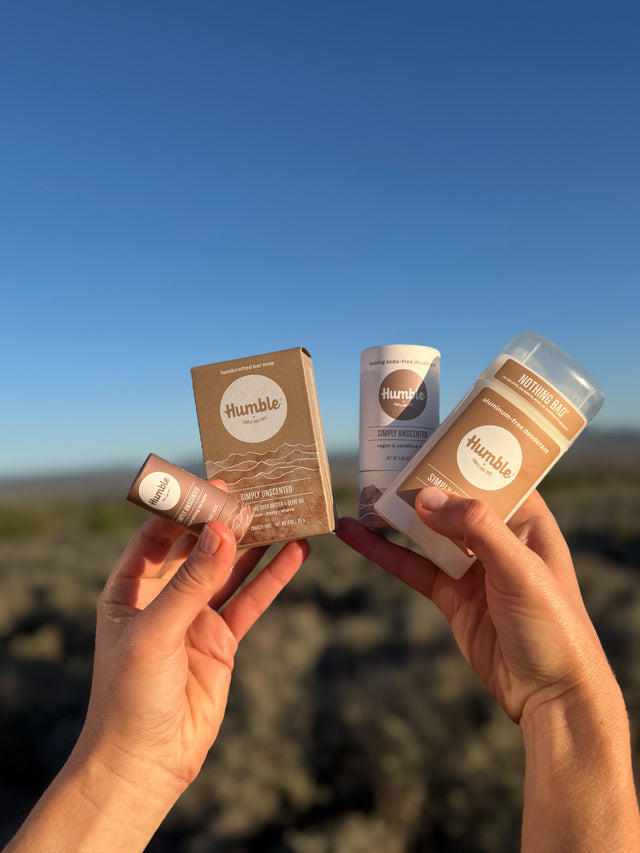
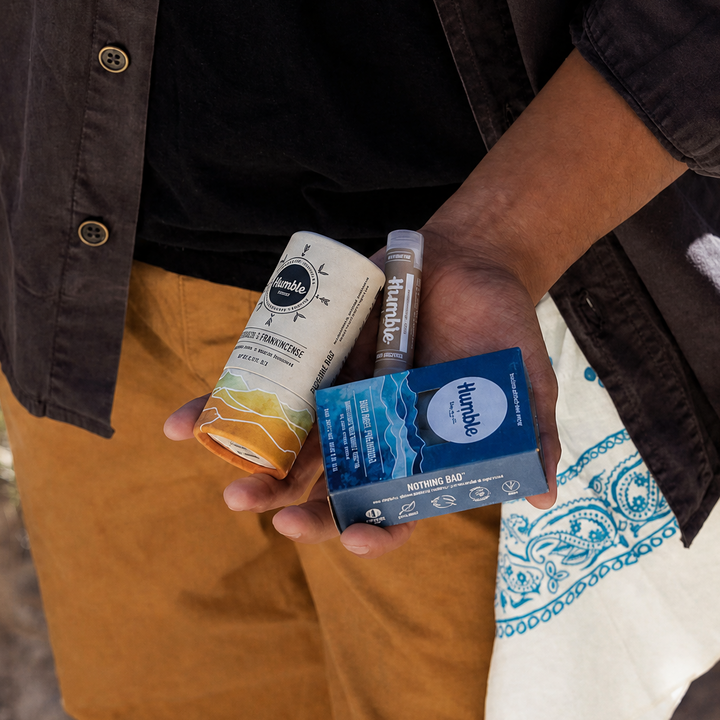
Other ingredients worth knowing about: coconut oil provides a smooth base for application and has natural antimicrobial properties, while essential oils like lavender add scent without synthetic fragrance. Humble offers both formulas, so you can choose based on your skin's needs. If you've had irritation with natural deodorants before, start with the gentle, baking-soda-free formula and work from there. If your skin handles it well, the original aluminum-free deodorant is a solid starting point.
If you have sensitive skin or experience irritation, a baking-soda-free formula with magnesium hydroxide or arrowroot powder can provide effective odor control without the burn.
FAQs: Switching to Natural Deodorant
Real concerns deserve real answers. Here are the questions that come up most often during the transition to natural deodorant.
How long does the natural deodorant transition take?
For most people, the adjustment period lasts one to four weeks. The first two weeks tend to be the most noticeable, with odor and wetness peaking early and then gradually improving. Antiperspirants work by using aluminum-based compounds to block sweat ducts, which explains why switching can change underarm wetness patterns as your body readjusts. Some people adjust faster; some take a little longer. Both are normal.
Will I smell worse before I smell better?
Probably, yes, at least for the first week or two. This is the part nobody loves to talk about, but it's predictable and temporary. Your microbiome is shifting, and your sweat glands are reactivating. Reapplying during the day and wearing breathable fabrics helps manage it while your body finds its new balance.
What if I get a rash or irritation?
Irritation during the transition is usually caused by baking soda sensitivity, not the switch itself. If you notice redness or a burning sensation, try taking a two- to three-day break to let your skin calm down, then switch to a baking-soda-free formula. You can also check out common natural deodorant myths to separate what's normal from what needs attention.
Can I go back to antiperspirant if it doesn't work?
Yes, absolutely. There's no rule that says you have to commit permanently before you know if it works. Some people find it helpful to alternate between their old antiperspirant and their new natural deodorant during the first week or two to make the switch gentler. The goal is to find what works for your body, not to follow a rigid protocol.
What's the best natural deodorant for sensitive skin?
A baking-soda-free formula is the best starting point. Look for magnesium hydroxide or arrowroot powder as the active ingredient, and avoid formulas with alcohol or synthetic fragrance. If you want to try a few options before committing to a full size, Humble's natural deodorant page is a good place to explore what's available.
The transition is temporary, manageable, and worth it. If you experience irritation, switching to a baking-soda-free formula or taking a short break can help you get there without giving up.
You're Closer Than You Think
The hardest part of switching to natural deodorant isn't the smell or the wetness; it's not knowing whether what you're experiencing is normal. Now you do. The transition is predictable, it peaks early, and it gets better. Most people who stick with it past week two are glad they did.
If you're ready to start, or ready to try again after a previous attempt that didn't go well, start with what works for your skin. Humble offers both the original baking soda formula and a gentle, baking soda-free option, so you're not locked into one approach.
Carry that confidence with you. Shop Humble Brands and find the formula that fits. Shop to swipe.
Humble On.
Related Reads


Most loved
Shop bestsellers

- Grounding
PLASTIC FREE DEODORANT
Black Spruce Plastic-Free Deodorant
$12.99
Scent intensity: 4/5


Leave a comment
Please note, comments must be approved before they are published